Muktinath Temple Must visit
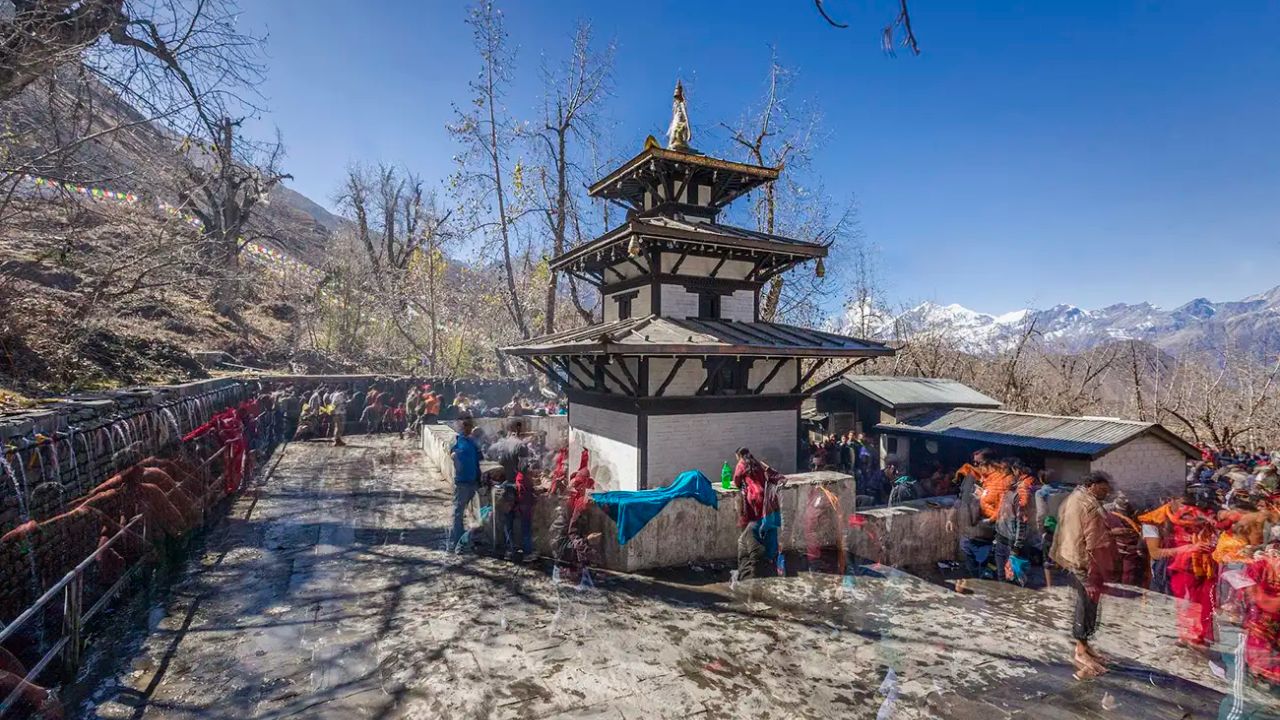
The pagoda-style temple of Lord Vishnu, one of the 108 Divya Desams.
The sacred temple of 108 water spouts, high in the Mustang Himalaya.
Reviewed by Ghumo Bihar team
About Muktinath
Muktinath, at about 3,700 m in the Mustang district, is sacred to Hindus and Buddhists alike. Hindus revere it as one of the 108 Divya Desams of Lord Vishnu; pilgrims bathe under its 108 cold water spouts and in the two kunds for mukti, or liberation. Buddhists honour it as Chumig Gyatsa, and the Jwala Mai shrine has a natural flame burning over water.
The journey is part of the experience: fly from Pokhara to Jomsom past the Annapurna and Dhaulagiri peaks, then drive up through the Kali Gandaki valley, where shaligram stones are found, past the apple village of Marpha and the old town of Kagbeni. It is a high-altitude trip, so plan it carefully.
Places to visit
12 places, best first. Timings and fees change often, so check before you go.
The pagoda-style temple of Lord Vishnu, one of the 108 Divya Desams.
Pilgrims bathe under 108 ice-cold spouts and in two sacred ponds.
A shrine where a natural flame burns over water and stone.
The windy airstrip town on the Kali Gandaki, with views of Nilgiri.
A shrine where a natural flame burns over water and stone.
An old fortress village at the gateway to Upper Mustang, with a red monastery.
The windy airstrip town on the Kali Gandaki, with views of Nilgiri.
A whitewashed village famous for apples and apple products.
An old fortress village at the gateway to Upper Mustang, with a red monastery.
One of the world's deepest gorges, where shaligram stones are found.
A whitewashed village famous for apples and apple products.
One of the world's deepest gorges, where shaligram stones are found.
Nearby, add to the same trip: Jomsom, Kagbeni, Marpha and the Kali Gandaki valley.
Travel with Ghumo Bihar
Group trips from Patna on fixed dates. Join on your own or as a family.
Kathmandu, Pokhara, Manakamana & Muktinath
Private trip
When to go
March to June and September to November have the most reliable weather and flights. Winters are very cold, with snow, and the monsoon brings landslides on the road.
March–June
Cool days, cold nights
Good for the pilgrimage; windy afternoons.
July–August
Rain-shadow area, but roads below are risky
Landslides and flight delays; avoid if possible.
September–November
Clear and cool
The best weather and mountain views.
December–February
Below freezing, snow
Very cold; many lodges close.
Getting there
Reach Pokhara first. From there, fly to Jomsom (20 minutes, morning only, weather permitting) and drive up to Muktinath, or go all the way by jeep.
20 minutes + 1.5–2 hours
Flights run in the morning and depend on weather.
About 8–10 hours
Rough mountain road via Beni and Jomsom.
25 minutes or 6–7 hours
Then continue as above.
On the ground
From Ranipauwa, the village below the temple, walk or take a short pony or bike ride up to the temple.
Most pilgrims stay one night in Jomsom and one in Ranipauwa or return to Jomsom the same day.
Questions
Go to Pokhara, fly to Jomsom (20 minutes) and drive 1.5–2 hours to Muktinath, or drive all the way from Pokhara in 8–10 hours.
Many senior pilgrims visit, but the altitude is about 3,700 m. Consult your doctor first and plan rest days.
Yes, an Annapurna Conservation Area permit. We arrange it for our travellers.
March–June and September–November.
Yes. We plan group and private trips with Kathmandu and Pokhara.
Nearby