

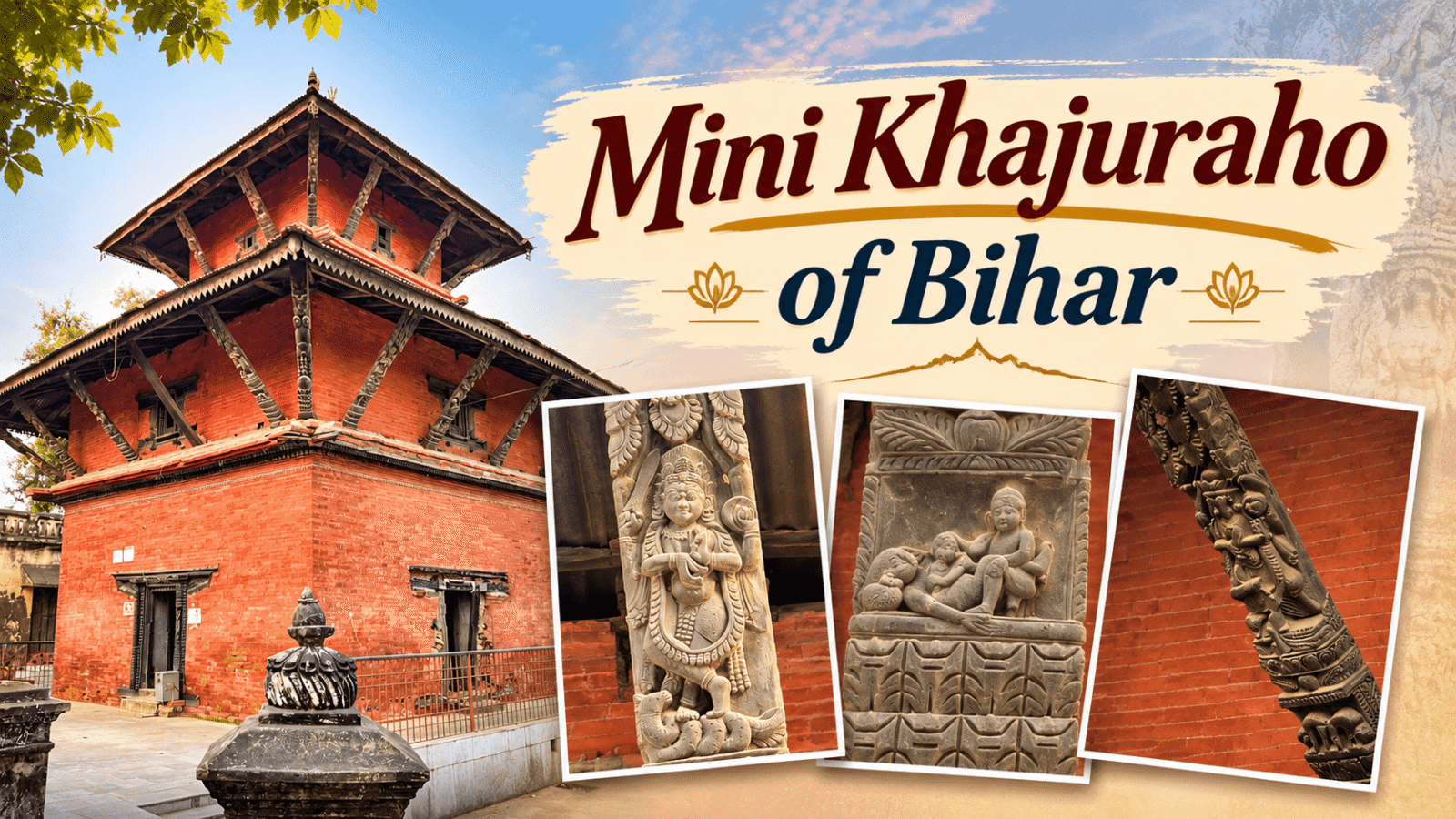
Ask anyone in Patna about Hajipur and you’ll hear about bananas, the Gandhi Setu and the traffic on it. Very few people will mention the Nepali Mandir.
That’s a shame, because sitting quietly at Konhara Ghat, where the Gandak meets the Ganga, is one of the strangest and most beautiful buildings in the state. It looks like someone picked up a temple from Kathmandu and set it down on the banks of a Bihar river.
Locals call it the Nepali Mandir or the Nepali Chhawani Mandir. Some travel writers have started calling it the “Mini Khajuraho of Bihar“. Whatever you call it, it deserves a lot more visitors than it gets.
Where the Gandak meets the Ganga
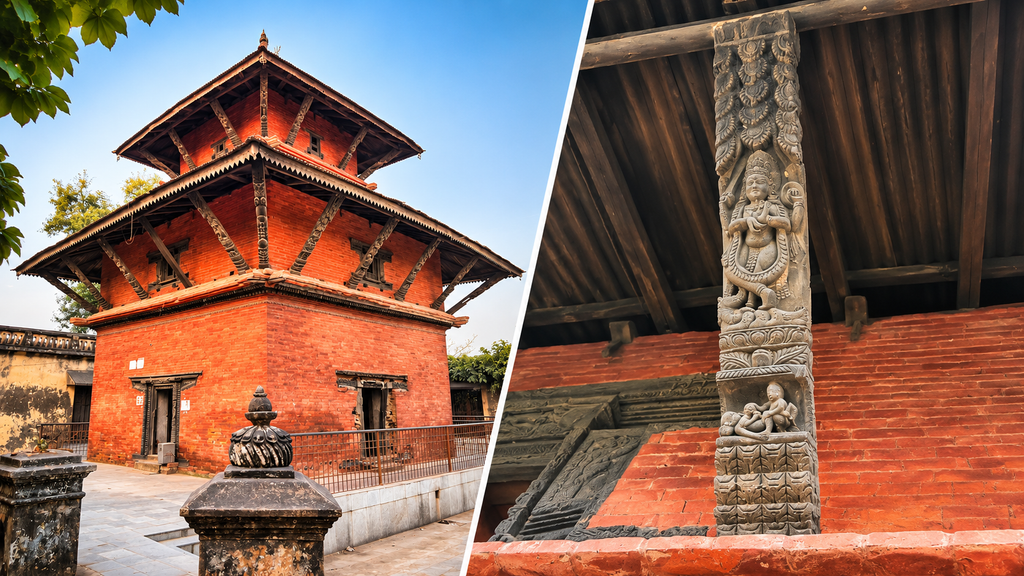
The temple stands at Konhara Ghat (you’ll also see it spelt Kaunhara) on the edge of Hajipur town, right at the sangam of the Ganga and the Gandak.
In Nepal the Gandak is called the Narayani. It comes down from the Himalayas, enters Bihar near Valmiki Nagar, and keeps going for hundreds of kilometres before it finally joins the Ganga here.
When you think about it, there couldn’t be a better spot for a Nepali temple. The river is the old link between the hills of Nepal and the plains of Bihar, and this is where its journey ends.
Konhara Ghat has been a place for holy dips, prayers and last rites for centuries. Pilgrims from Nepal still come here in Sawan, Ashwin and Kartik, the same way so many of us go to Pashupatinath or Janakpur.
People talk about the roti-beti rishta between Bihar and Nepal. Here you can actually see it, carved in wood.
Who built it, and when?
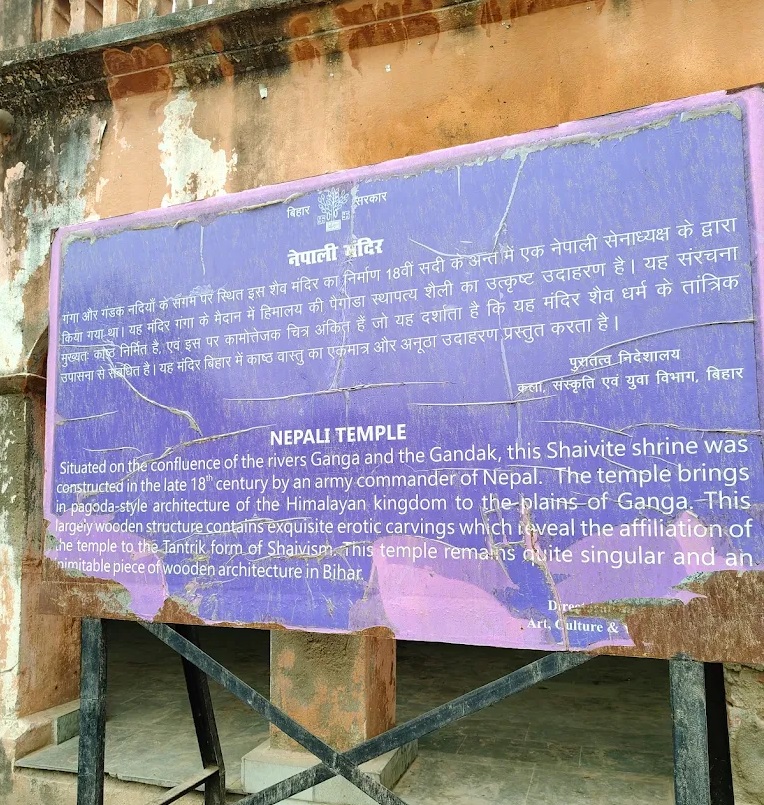
The story you’ll hear most often, and the one the Bihar government’s archaeology listing goes with, is that the temple was built by a commander of the Nepal army.
He’s usually named as Mathbar Singh Thapa. Since a soldier built it, people started calling it the Chhawani temple, chhawani being the word for an army cantonment.
The date is a bit of a puzzle. Official sources say the 18th century. Some local accounts put it at around 170 years old, and a couple of older writings name different Nepali officials as the builder.
Mathbar Singh Thapa was born in 1798, so if he really built it, the 19th century seems more likely. Either way, you’re looking at a temple that’s roughly 200 years old, built by Nepalis, in their own style.
A bit of Kathmandu in the plains
The first thing that hits you is how different it looks. Bihar has plenty of old temples, but nothing quite like this.
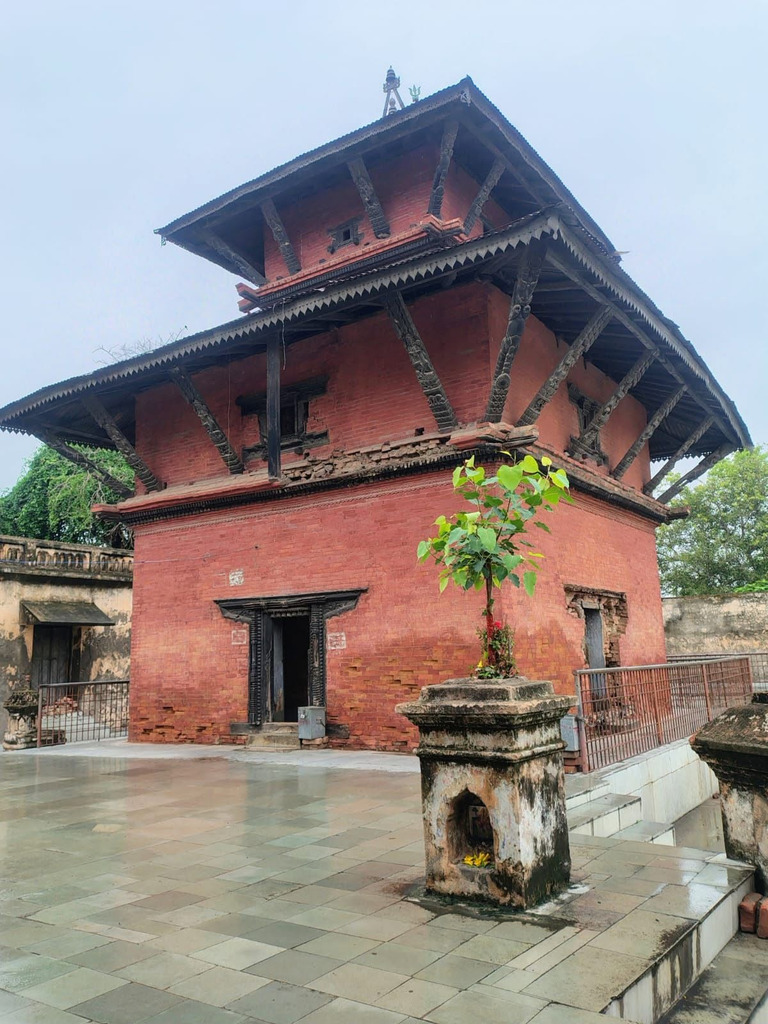
It’s a two-storey pagoda in the Newar style, the same tradition as Pashupatinath in Kathmandu. Most of it is wood, with brick, stone and iron pillars holding things together, and sloping tiered roofs on top. The state’s own archaeology listing calls it one of a kind, and once you’re standing in front of it you’ll understand why.
There are four doors, one on each side, and the wooden entrances are worked into a square lattice. Carved pillars and struts hold up the middle of the structure. Inside the sanctum is a Shivling, with sixteen carved wooden panels around it. Spend a few minutes looking closely and you’ll start picking out Ganesha, Lakshmi, animals, flowers and creepers. Whoever carved these had clearly learnt the craft in the Kathmandu Valley.
Locals also say that at certain times of day, sunlight comes in through the southern door and falls right on the Shivling. Worth keeping an eye out for.
So why “Mini Khajuraho”?
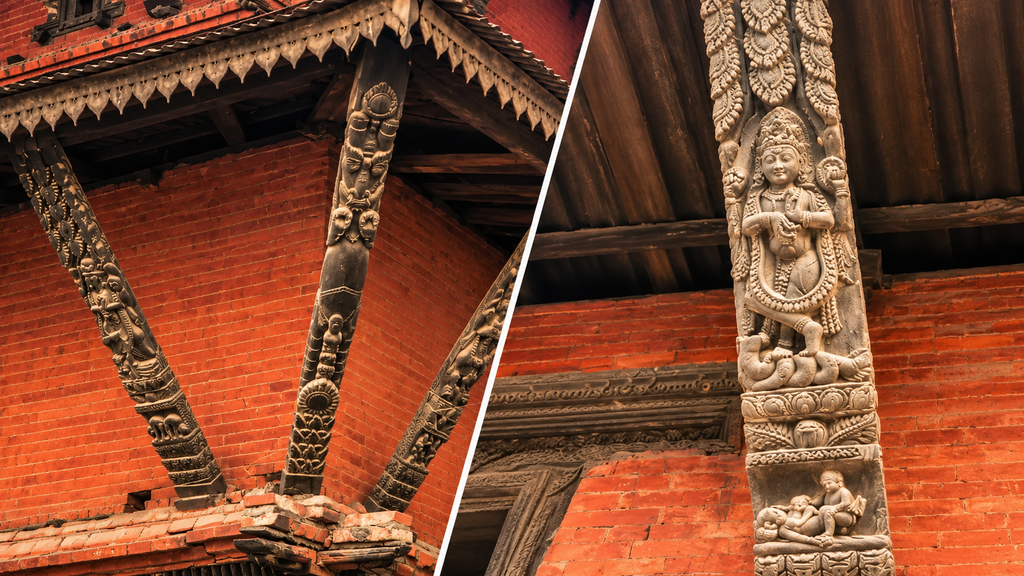
This is the part that catches most first-timers off guard. Mixed in with the gods and flowers are erotic carvings: couples in all sorts of positions, cut straight into the wood of the panels, doors and pillars.
If you’ve been to Kathmandu, Bhaktapur or Patan, you’ll recognise the style from the roof struts of the temples there. The temple’s mahant has said there are such carvings on 17 pillars, and that he hasn’t seen erotic art on wood like this anywhere else.
So what are they doing on a Shiva temple? Nobody has one neat answer. Locals will tell you the carvings are a reminder to leave your worldly desires outside before you go in to Bholenath.
Others point out that kama is one of the four goals of life in Hindu thinking, along with dharma, artha and moksha, so why hide it?
And in Nepal there’s an old belief that lightning, imagined as a shy young goddess, won’t strike a temple that has these carvings on it. Take your pick.
What’s certain is that there are very few places in India where you can see this kind of Newar woodwork outside Nepal. One small heads-up: the carvings are fairly explicit, so keep that in mind if you’re visiting with kids.
The story behind Konhara Ghat
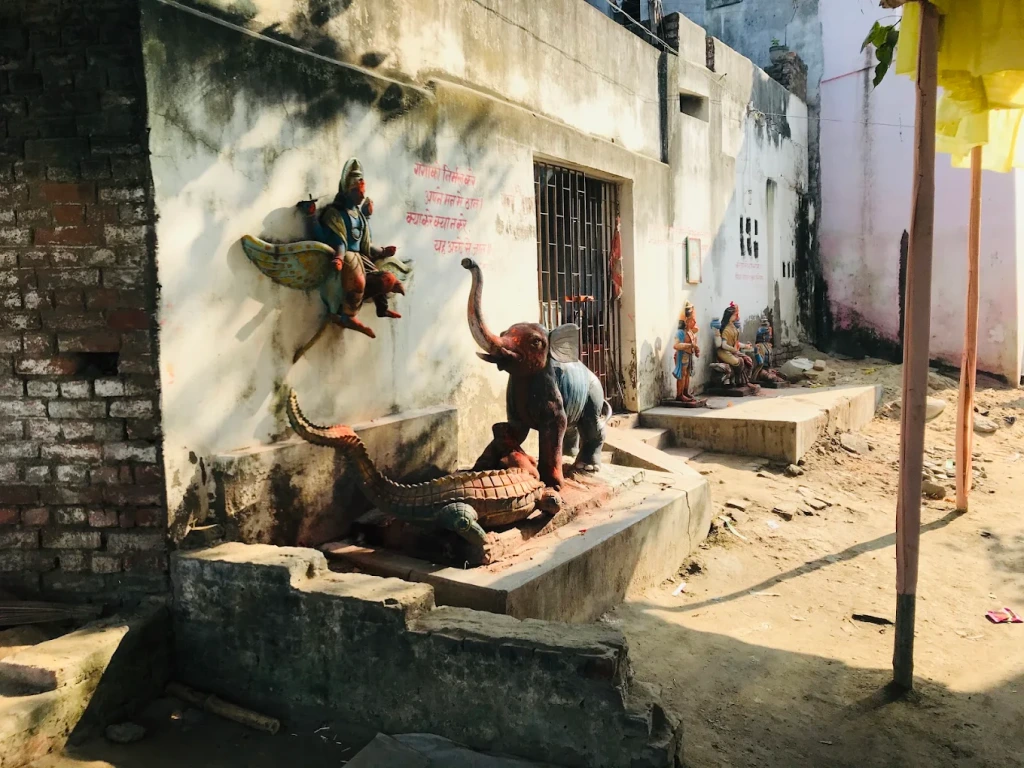
You can’t talk about this temple without talking about the ghat. Konhara Ghat is tied to the story of Gajendra Moksha. An elephant (gaj) and a crocodile (grah) fought in these waters until Lord Vishnu came down to save his devotee, the elephant.
People watching kept asking “kaun haara?”, meaning “who lost?”, and that’s said to be how the ghat got its name.
There’s a more down-to-earth explanation as well. The Ganga comes in from the west and the Gandak from the north, so the two rivers meet at almost a right angle, a kon or corner.
Whichever version you believe, the Gaj-Grah fight is a big part of Hajipur’s identity, and you’ll see it used as a symbol of the town.
It needs help, and soon
We’d be lying if we told you the temple is in great shape. It isn’t.
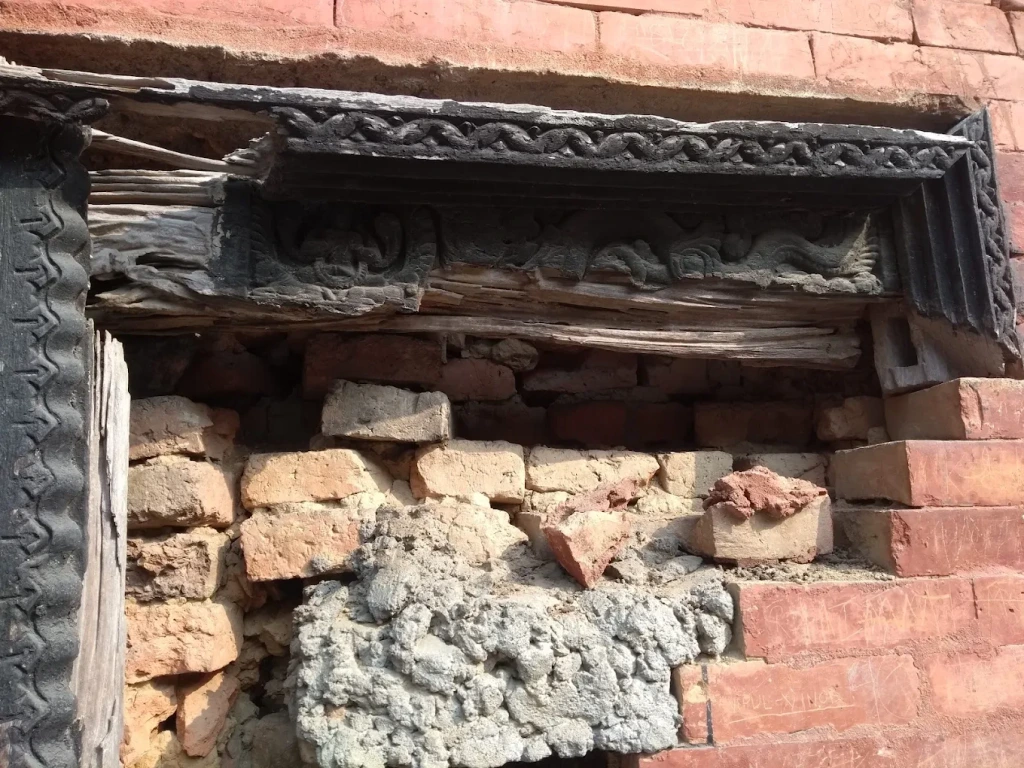
News reports and visitors over the last few years have all described the same thing. Termites are getting into the wooden panels and the inside walls are crumbling. People have scratched their names into the walls.
The temple’s ashtadhatu idols were reportedly stolen back in 2008. The staircase to the upper floor is shut, so you can only look at the upper carvings from below.
The caretaker has said he’s looked after the place for years without being paid. Money for repairs was reportedly sanctioned in 2018, but apart from a new floor, not much has changed. Meanwhile new buildings keep going up around it.
Honestly, that’s one more reason to go. Places like this survive when people show up, take photos and talk about them. Historians and locals both say that with proper care it could be one of Bihar’s best heritage sites, and a lovely symbol of the bond between India and Nepal. A bit of attention could go a long way.
Planning your visit
Getting there
From Patna, cross the Ganga on the Gandhi Setu or the JP Setu and head for Konhara Ghat on the western side of Hajipur. Traffic decides everything on that route, but it’s usually under an hour.
If you’re coming by train, get off at Hajipur Junction and take an auto or e-rickshaw to the ghat. The nearest airport is Patna.
When to go
October to March is the most comfortable. If you want to see the place come alive, go in Sawan or on Mahashivratri, when devotees turn up in numbers.
Kartik is great too. Pilgrims bathe at the sangam, and the Sonepur Mela starts on Kartik Purnima just across the river, so you can do both in a day.
Good to know
There’s no entry fee. Go during the day, since the area gets quiet in the afternoon. It’s a working Shiva temple, so dress modestly and take your shoes off before the sanctum.
Please don’t touch or lean on the wooden panels, they’re fragile. Be respectful with your camera around worshippers and the cremation ghat nearby. And if you can, leave something for the caretaker. He’s been holding the place together.
Make a day of it
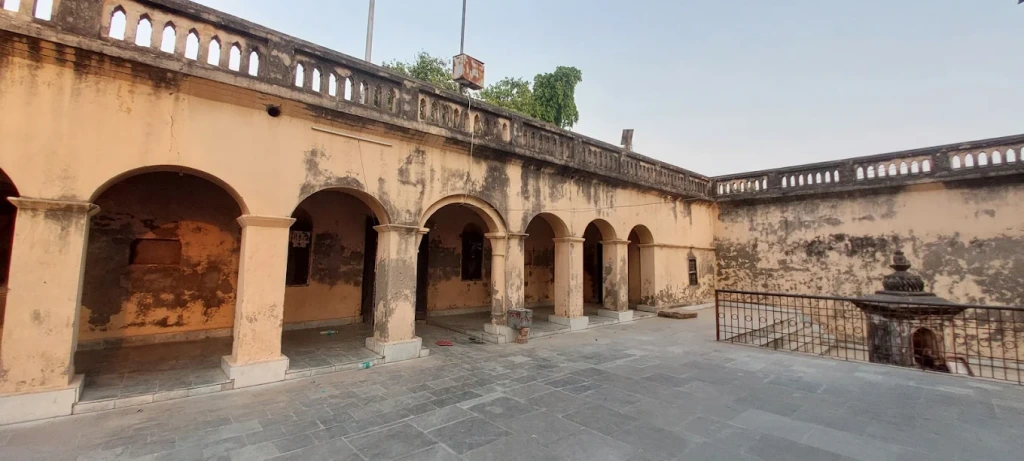
The Nepali Mandir fits easily into a half-day or full-day trip around Hajipur and Sonepur. Watch the sunset from Konhara Ghat. Cross the Gandak to Baba Harihar Nath Mandir in Sonepur, which is linked to the same Gaj-Grah legend.
If you’re there in November or December, the Sonepur Mela is a must. Back in Hajipur, you can add Ramchaura Mandir near Helabazar, the old Jami Masjid and Pataleshwar Mandir.
And if you’ve got the whole day, Vaishali is close enough for the Ashokan pillar, the stupas and Lord Mahavira’s birthplace.
Quick answers
Where is the Nepali Temple in Hajipur?
At Konhara Ghat, where the Ganga and Gandak meet, on the edge of Hajipur in Vaishali district.
Which god is it dedicated to?
Lord Shiva. There’s a Shivling in the sanctum.
Why is it called Mini Khajuraho?
Because of the erotic carvings on its wooden panels, doors and pillars.
Why is it called the Chhawani Mandir?
It’s said to have been built by a Nepal army commander, and chhawani means army cantonment.
Is there an entry fee?
No, it’s free.
How far is it from Patna?
A short drive across the Ganga, usually less than an hour depending on traffic.
One last thing
Don’t go expecting a polished, ticketed monument. There’s no gift shop and no guide waiting at the gate.
What you’ll find is a weathered old temple that came down the Gandak from Nepal about two hundred years ago and somehow never left. Go see it, take some photos and tell your friends. Just don’t wait too long.