

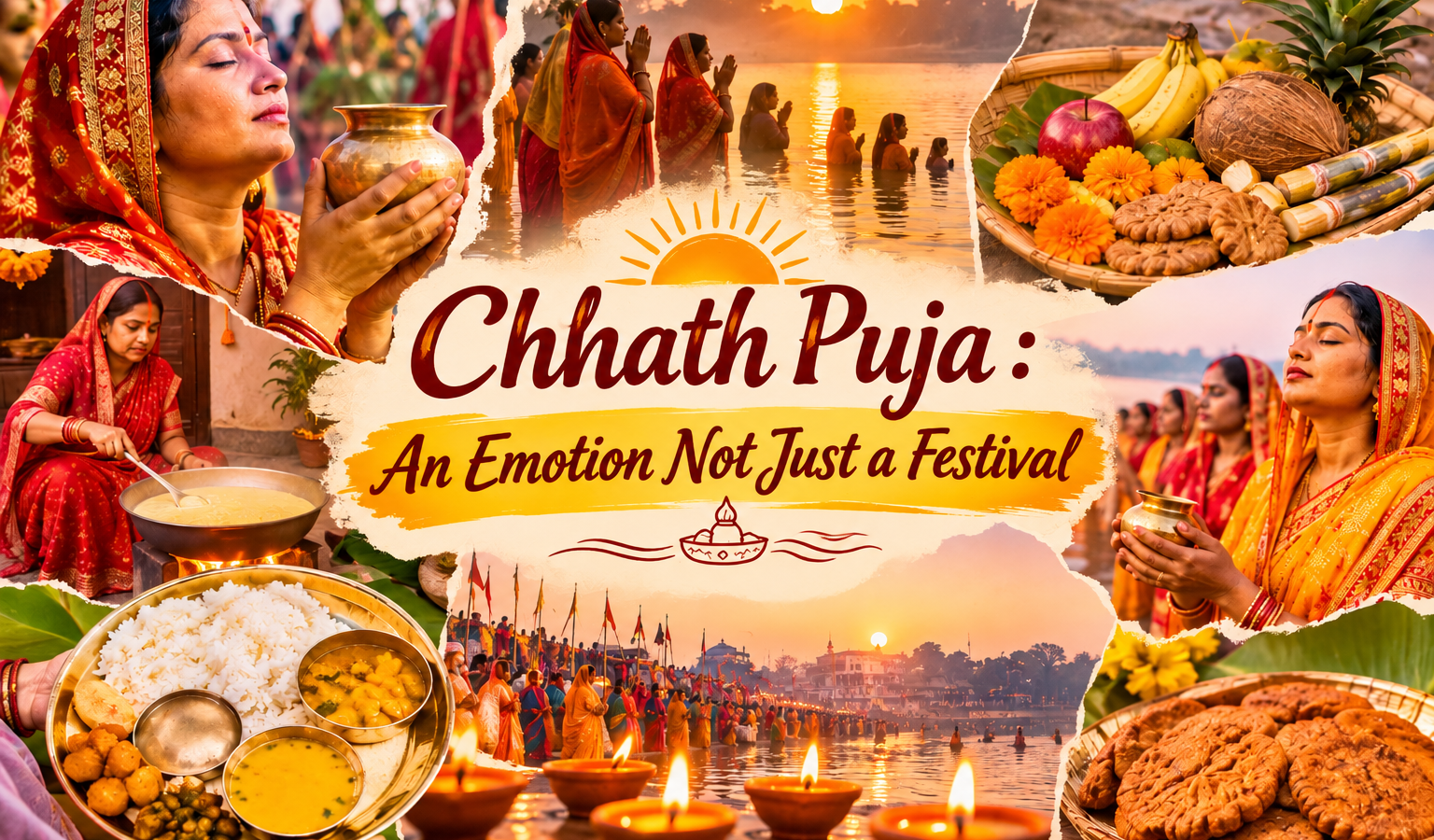
Ask anyone from Bihar what Chhath means to them, and they rarely start with rituals. They start with a memory.
The smell of thekua frying in ghee. A mother’s voice humming old Bhojpuri songs in the kitchen. A train ticket booked months in advance, just to be home for four days.
That is why we say Chhath is an emotion. It is not only about worshipping the Sun. It is about coming home to your family, your roots and yourself.
Over four days, the festival moves from quiet preparation to deep devotion, and finally to joyful release.
Day 1: Nahay-Khay – Where Purity Begins
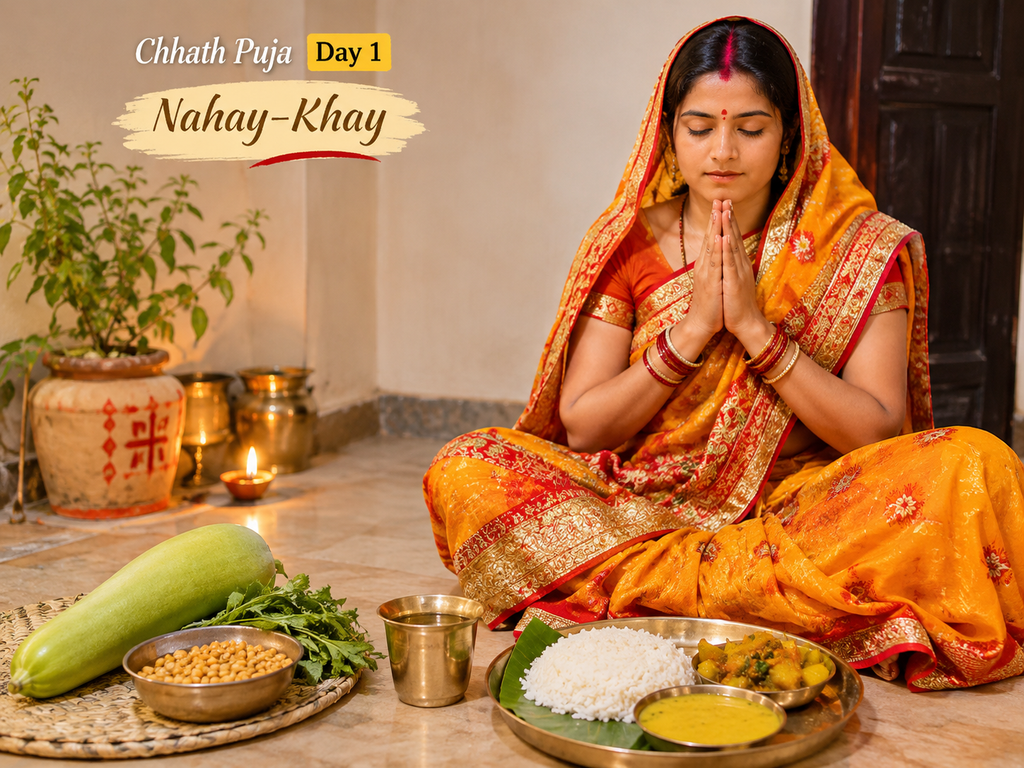
The journey starts with a holy bath, often in a river, and a thorough cleaning of the home. Everything is made ready, inside and out.
The first meal is simple and sacred: rice, chana dal and lauki (bottle gourd), cooked without onion or garlic. It is humble food, but it carries the care of the whole family.
Nahay-Khay is a reminder that before we ask for blessings, we prepare ourselves with a clean body, a calm mind and a clean home.
Day 2: Kharna – The Day of Discipline
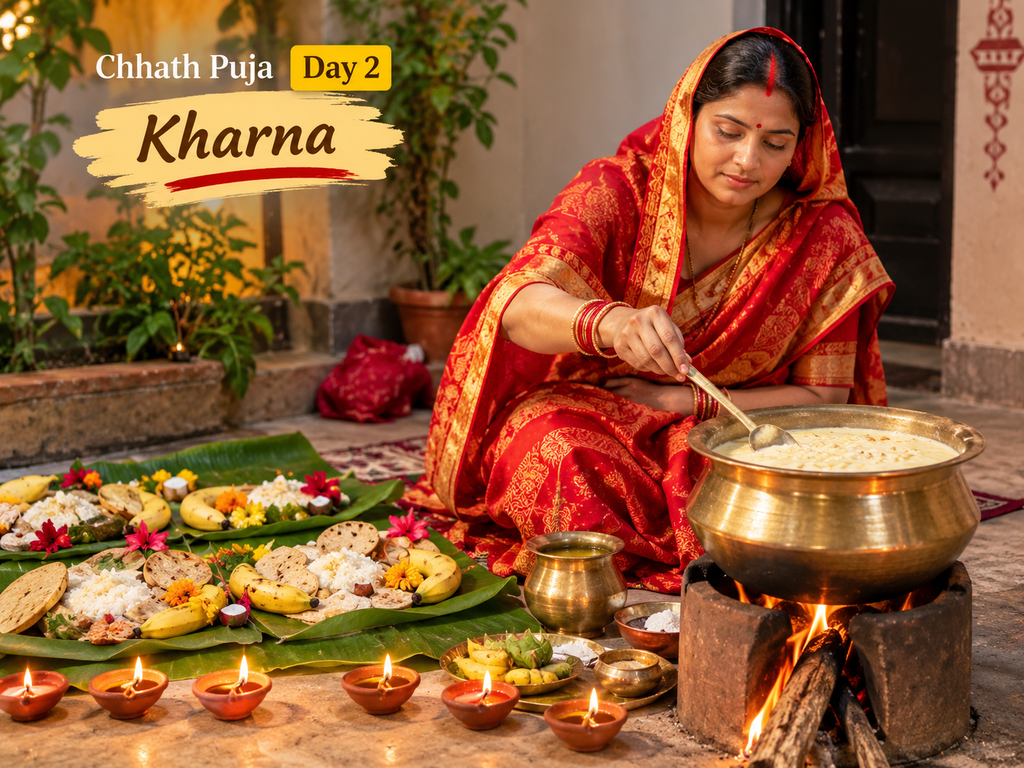
On the second day, devotees fast from sunrise to sunset, without even a sip of water. As evening falls, they offer prayers and prepare prasad of jaggery kheer, roti and fruit.
Eating this prasad ends the day’s fast and begins something much harder: a 36-hour nirjala vrat, without food or water, that continues until the final morning.
It takes extraordinary strength. And yet, ask a devotee and they will tell you it feels less like hardship and more like faith holding them up.
Day 3: Sandhya Arghya – Faith Meets the Setting Sun
This is the most beautiful day of Chhath.
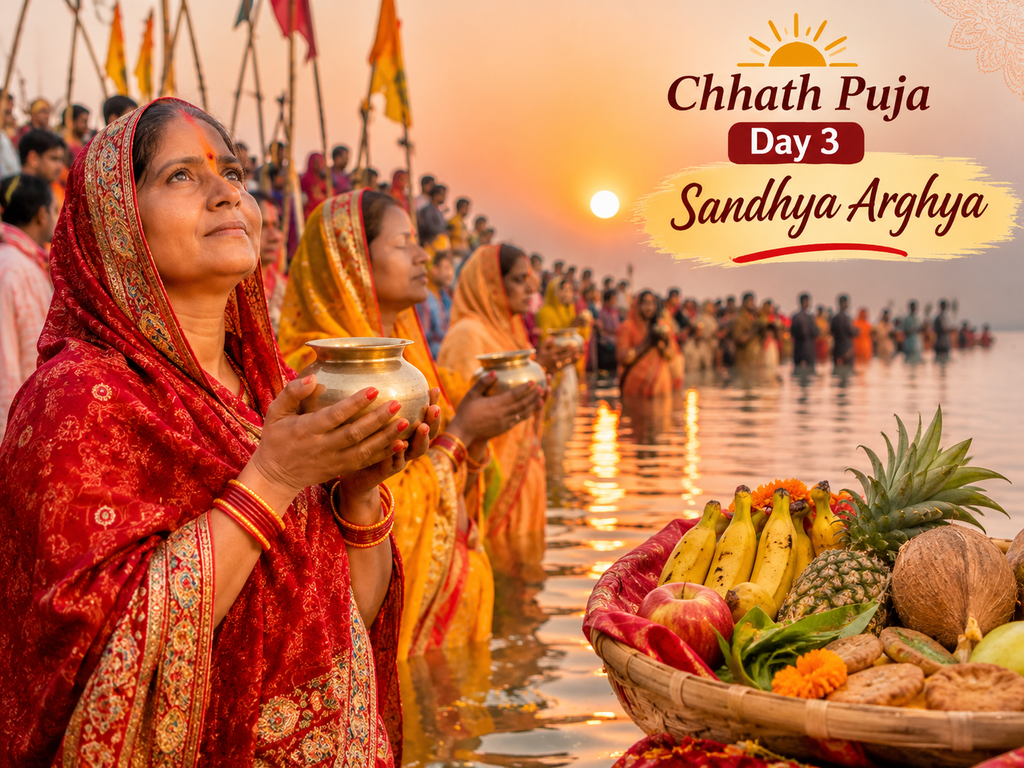
By afternoon, the ghats begin to fill. Families walk together, carrying beautifully decorated bamboo soops and daura filled with fruit, coconut, sugarcane, thekua and seasonal offerings. At home, kasaar and prasad have been prepared with great devotion.
Then comes the moment people remember for life. Devotees stand waist-deep in the water as the sun sinks toward the horizon and offer Arghya to Surya Dev. Diyas float on the river, folk songs rise into the air, and thousands of people pray as one.
In that moment, there are no strangers on the riverbank. There is only shared faith, family and identity.
Day 4: Usha Arghya and Paran – A New Beginning
The last day begins before dawn. In the dark, families return to the ghats, wrapped in shawls and waiting quietly for the sky to change.
When the first rays of the sun appear, devotees offer Usha Arghya to the rising Sun and pray to Chhathi Maiya for the health, happiness and prosperity of their loved ones.
Then comes Paran, the breaking of the 36-hour fast. Prasad is shared with family, neighbors and friends, and the long spiritual journey ends with smiles, hugs and gratitude.

More Than a Festival, A Feeling
Chhath teaches us patience, discipline, gratitude and togetherness. It is one of the few festivals where the Sun is honored both as it sets and as it rises, a reminder that we should be grateful for endings and beginnings alike.
For those living far from Bihar, Chhath brings a familiar ache: the longing for home, for family, for the sound of those songs by the river.
Some traditions are not simply passed down through generations. They travel from heart to heart.
Chhath is not just celebrated. It is felt, remembered and lived.
What is your earliest Chhath memory? Share it in the comments. We would love to read it.