
Barabar Caves
India's oldest rock-cut caves, carved for Ashoka's Ajivika monks in the 3rd century BCE, with mirror-polished granite walls and a famous echo.
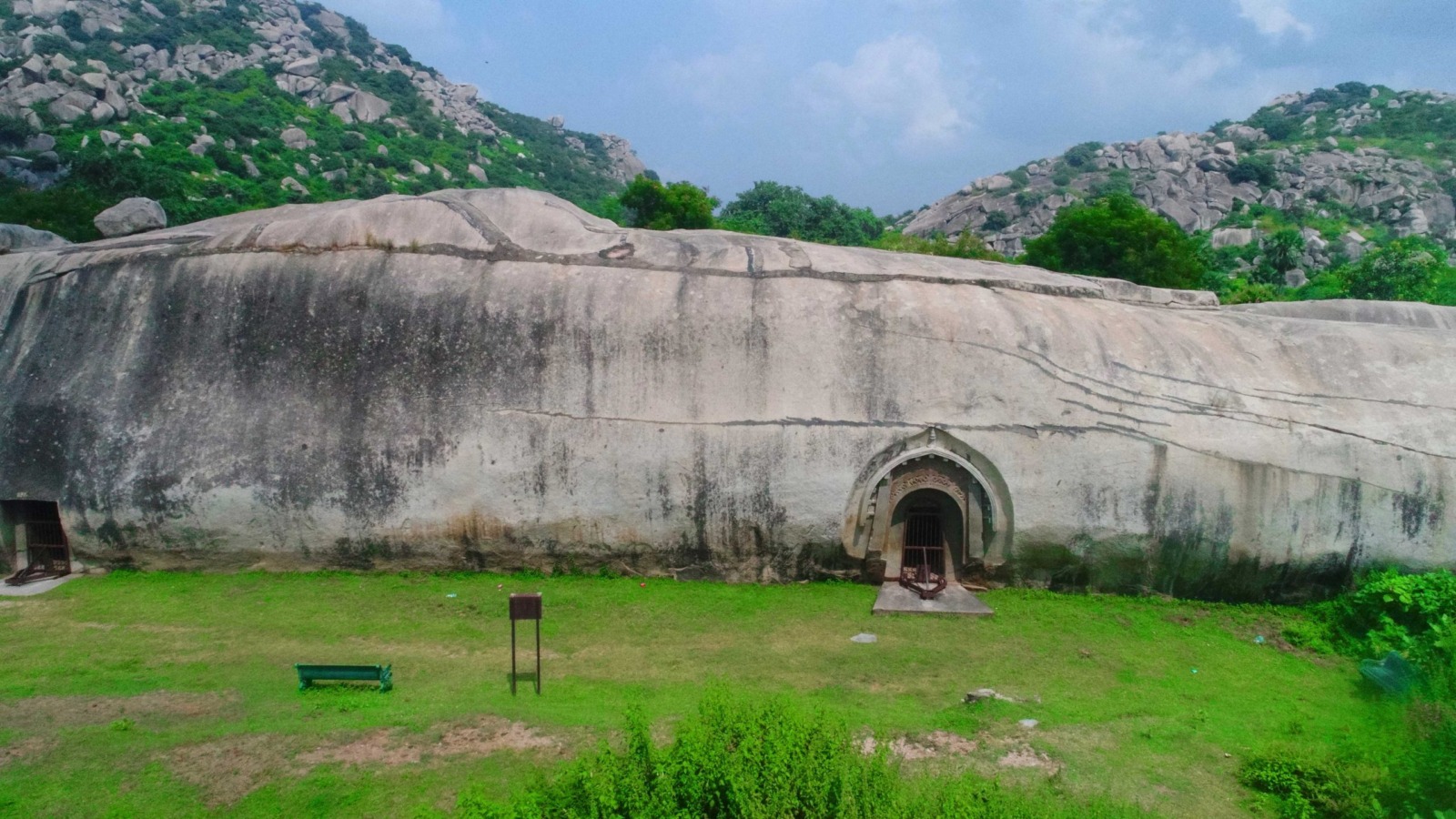
Barabar Caves are the oldest surviving rock-cut caves in India, carved out of solid granite more than 2,200 years ago during the Mauryan Empire. Tucked into the rocky Barabar and Nagarjuni hills of Jehanabad district, about an hour from Gaya, they were gifted by Emperor Ashoka and his grandson Dasharatha to a group of wandering ascetics called the Ajivikas. Step inside and you will find walls polished so smooth they still reflect your torchlight, and an echo that seems to hum back at you.
For a place this important, Barabar is surprisingly quiet. There are no crowds, no queues and no ticket counter — just you, the hills and some of the finest stonework ancient India ever produced.
Why visit Barabar Caves
- They are older than Ajanta and Ellora. Barabar is where India’s long tradition of rock-cut architecture began.
- The Mauryan polish. The inner granite walls were ground and polished to a glass-like shine that has survived for over two millennia.
- The echo. The curved ceilings make even a soft hum ring around the chamber.
- Ashoka’s own words. Brahmi inscriptions carved in Ashoka’s reign are still readable above the doorways.
- A literary landmark. E. M. Forster based the mysterious “Marabar Caves” of his novel A Passage to India on Barabar.
History of Barabar Caves
The caves were carved between roughly 261 and 230 BCE. Inscriptions on the walls tell us that Ashoka, calling himself King Priyadarsin, dedicated caves here in the 12th and 19th years of his reign. They were meant as shelters for monks, especially during the rainy season, when ascetics stopped travelling.
The monks were Ajivikas, a sect that grew up at the same time as Buddhism and Jainism. They believed that everything in life is fixed by fate, or niyati, and that no action can change it. Ashoka’s father Bindusara is said to have followed this faith. The Ajivikas later faded away completely, and their own texts are lost. Barabar is one of the very few places where their story is still written in stone.
A few decades after Ashoka, his grandson Dasharatha Maurya carved three more caves on the neighbouring Nagarjuni hill and gave them to the Ajivikas “for as long as the sun and moon endure”. Centuries later, in the 5th–6th century CE, the Maukhari king Anantavarman added Sanskrit inscriptions and Hindu images, and Buddhist, Jain and Hindu visitors kept using the caves.
The seven caves at a glance
There are seven caves in all — four on Barabar hill and three on Nagarjuni hill, about 1.6 km away. Locals call them Satgharwa, the “seven houses”.
On Barabar hill
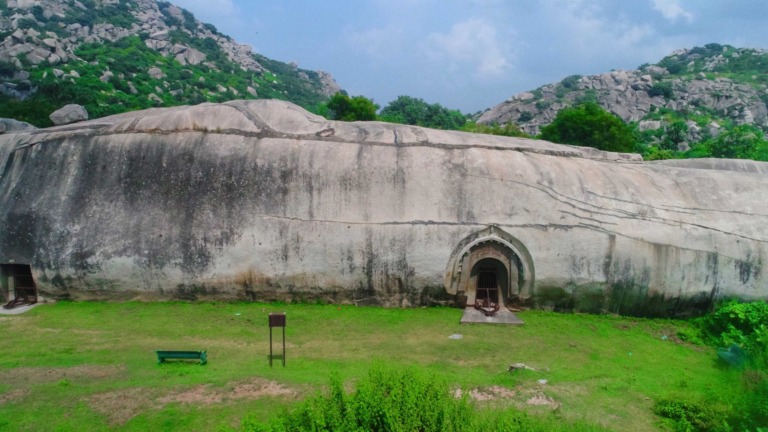
Lomas Rishi Cave is the star of the site. Its doorway is carved to look like a wooden hut, with a curved, horseshoe-shaped arch and a row of elephants walking towards small stupas. It is the earliest surviving example of the chaitya arch that later appears at Ajanta, Karla and many Buddhist sites. The inside was never finished, which is why it has no Ashokan inscription.
Sudama Cave, right next to it, has a plain entrance but the most beautiful interior. A rectangular hall leads to a round, domed inner chamber, and the polish here is at its best. Ashoka’s inscription above the door says he gave this “cave of banyans” to the Ajivikas in the 12th year of his reign.
Karan Chaupar Cave is on the north face of the same rock and is usually the first cave you see. It is a single long, polished hall with a raised platform at one end. Its inscription records Ashoka’s gift in the 19th year of his reign, as a shelter during the rains.
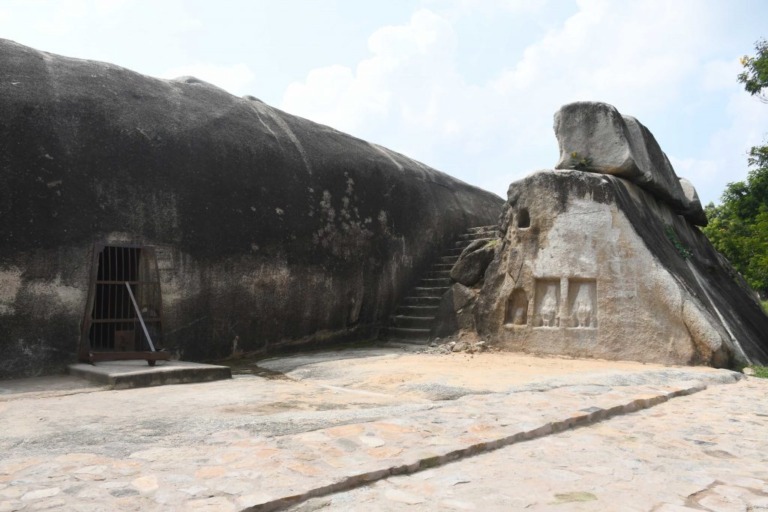
Visvakarma Cave sits a little apart, about 100 m to the east, reached by steps cut into the rock. It is unfinished, but Ashoka still dedicated it. The rock-cut steps leading up to it are among the oldest in India.
On Nagarjuni hill
Gopika Cave is the largest of all seven — a single long hall about 14 m by 6 m with rounded ends, reached by a flight of stone steps. Vapiyaka Cave (the “well cave”) and Vadathika Cave sit side by side on the northern face. All three carry Dasharatha’s dedication inscriptions, and some have later Sanskrit inscriptions too. Nagarjuni sees very few visitors, so it is a lovely, peaceful extension to your trip.
Siddheshwar Nath Temple on the hilltop
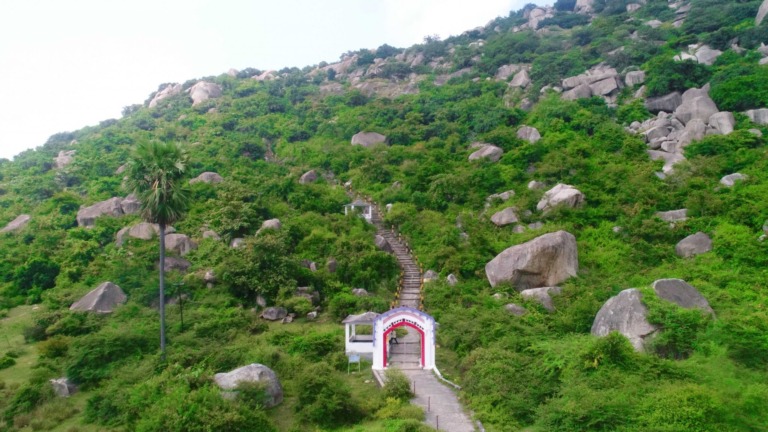
At the very top of Barabar hill stands the Siddheshwar Nath Temple, an old Shiva shrine believed to date to around the 7th century. Local legend links the hill with the Mahabharata warrior Ashwatthama. During Sawan (July–August), lakhs of devotees climb the hill to offer water to the Shivling, and the whole area turns into a pilgrimage fair. If you are coming mainly for the caves, avoid Sawan Mondays.
How to reach Barabar Caves
The caves are in Makhdumpur block of Jehanabad district, roughly 25–35 km north of Gaya and around 70 km south of Patna by road.
- By road: Take NH-83 (Patna–Gaya road) to Makhdumpur or Bela, then follow the signs to Barabar. Hiring a taxi from Gaya, Bodh Gaya or Patna is the easiest option. Autos are available from Makhdumpur and Jehanabad.
- By train: Makhdumpur and Bela stations on the Patna–Gaya line are the closest. For long-distance trains, get off at Gaya Junction.
- By air: Gaya airport is the nearest; Patna airport has more flights.
From the parking area, a rocky path with some steps leads to the main group of caves. It is a short but uneven walk, so wear good shoes. The hilltop temple is a much steeper climb.
Best time to visit
October to March is the best season — the air is cool and the rocks are comfortable to walk on. Go early in the morning; by midday the granite gets very hot from April to June. The monsoon makes the hills green and beautiful, but the paths can be slippery and the area is crowded during Sawan.
Timings and entry fee
The caves are open roughly from 6:00 AM to 6:00 PM, every day. There is no entry fee. Plan about 3–4 hours to see both Barabar and Nagarjuni hills without rushing, and more if you also climb to the temple.
Tips for your visit
- Don’t touch the polished walls — the shine has lasted 2,200 years, and hand oil and graffiti are the biggest threats to it.
- Hum softly or say a word inside Sudama or Karan Chaupar to hear the echo. You don’t need to shout.
- Carry a torch to read the Brahmi inscriptions and see the polish properly.
- Carry water and snacks; shops near the caves are limited.
- A local guide makes a big difference here — the stories are not written on any board.
Places to visit near Barabar Caves
- Bodh Gaya (about 40 km) — the Mahabodhi Temple, where the Buddha attained enlightenment.
- Gaya — the Vishnupad Temple and the ghats of the Phalgu river.
- Rajgir and Nalanda — make Barabar part of a wider Magadh heritage trip.
- Kauwa Dol — a nearby hill with ancient rock carvings.
Tips for your visit
- Start early: the rocks heat up fast and the light inside the caves is best in the morning.
- Wear shoes with good grip; the path to the caves is rocky and has uneven steps.
- Carry water and snacks; there are very few shops near the caves.
- Don't touch the polished walls; oil from hands damages the 2,200-year-old finish.
- Hum or speak softly inside Sudama and Karan Chaupar to hear the famous echo.
- Visit the Nagarjuni caves too; they are only 1.6 km away and far less crowded.
- Avoid Sawan Mondays if you only want the caves; the hill is packed with pilgrims.
- Carry a torch or use your phone light to read the Brahmi inscriptions.
- Combine with Bodh Gaya or Gaya in the same day; both are under an hour away.
Photos
Travel with Ghumo Bihar
Trips that visit Barabar Caves
No trip date yet. We can include Barabar Caves in a private trip planned for your group.